
Brand
ReBrand ReView: Statewise
Did you notice Statewise's rebrand? Learn more about where it's been and where the brand is headed, along with commentary.
Did you notice the National Alliance for Caregiving’s rebrand? Learn more about where it's been and where the brand is headed, along with commentary.
Kim Cantor, Chief External Affairs Officer at the National Alliance for Caregiving, sat down to chat about the non-profit organization’s rebrand. Stick around for a teardown and peek behind the curtain to see how this rebrand went from concept to go-live.
About the brand: The National Alliance for Caregiving is a catalyst for change, transforming how the United States recognizes, supports, and values the 63 million family caregivers providing complex care. Through our nationally recognized caregiving research and advocacy, we drive policy, system, and culture change to elevate family caregivers as a national priority. For more information, visit their website or explore their latest report: Caregiving in the US 2025.

Non-profit marketing and brand work is a completely different animal from for-profit work. Firstly, rather than being accountable for revenue metrics, the measurements are more focused on values and impact.
Secondly, it places a uniquely important emphasis on brand storytelling and captivating audiences to take action such as donating money, volunteering, or reaching out to policymakers. It also requires a tight balance of creative—but technical—communication and writing skills that make your organization stand out in grant applications.
Thirdly, from an organizational structure perspective, decisions are often driven by consensus and committee. With smaller headcounts, most departments want visibility and a say in decisions that may be more distant from their own domain. This creates its own unique dynamics, perks, and challenges for marketers.
Now, let’s dive into the National Alliance for Caregiving’s story!
“The National Alliance for Caregiving is almost 30 years old. It started in 1996, and was a founder-driven organization with 3-5 employees. There were some small tweaks to the brand over the years, but it essentially remained the same,” Cantor added. “With new leadership and organizational growth, the brand just didn’t fit anymore. It felt dated and tired. It didn't really convey who we are, why we are here, and how we want to make a difference. It also only used our initials, making it hard for people to know the whole organization's name.”
“As an organization, we wanted our brand to match who we are. From a timing perspective, we had a great opportunity to share the new brand alongside one of our flagship products that we put out every five year with AARP,” Cantor added.
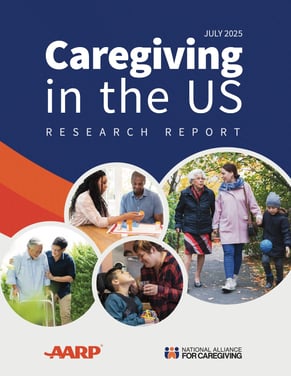
The Caregiving in the US Research Report, that the National Alliance for Caregiving did in collaboration with AARP
“One big challenge with a small organization is finding and dedicating resources to a new brand,” Cantor shared. “We needed to do something that was going to be meaningful, that could stand the test of time. The end goal was to have something that we could be proud of, but we also don’t want it to be 30 years before it happens again.”
Cantor quickly got the process underway after securing initial buy-in from leadership. “A group of us internally agreed that the identity felt old and tired, and that we needed to do something different. We asked around, including our board, like, ‘What do you think?’ Our leadership team worked closely together, issued an RFP, and invited a few others on the team to review the responses. We invited two companies to present, and ultimately selected Constructive, a brand strategy and website design firm that primarily focuses on working with nonprofits.”
“Our brand transformation started with developing a new strategic plan in collaboration with the board and staff. This new plan captured our CEO’s strategic vision, which helped set the stage.”
McKinsey & Company put out an article earlier this year titled: “The CEO’s role as chief storyteller.” It’s not by coincidence; it’s by design. The CEO is every organization’s vehicle to the truth. Employees seek understanding to do their jobs better, and boards rely on CEOs to share what’s going on within the organization. They are the spokes emerging from the wheel, connecting the internal and external.
“With that, came a much bolder and visionary approach for the organization. From that strategic plan, we worked with our communications firm to build out a new message framework that truly captured who we are, and how we want to talk about ourselves,” Cantor added.

“Stemming from that message framework, we carved a niche for ourselves,” Cantor added. “Our uniqueness revolves around leveraging research and advocacy — putting out new data, evidence-based research - to drive policy, system, and culture change all through the lived experience of family caregivers.”
“We have sister organizations, but for us, we don't provide direct services to family caregivers. Many others do,” Cantor adds. You don’t have to do all things in order to stand out with your audience, but you have to have a linchpin to something that you do extraordinarily well. That could mean good customer service, incorporating user feedback, or in the National Alliance for Caregiving’s case, leading the way in research and policy in support of family caregivers.
Sometimes in a rebrand, the identity or feel looks fairly similar when you look at the before and after. In other cases, the intention was to run in the complete opposite direction. The National Alliance for Caregiving was ready to take the latter approach.
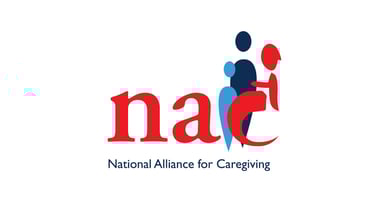
“Our brand looks totally different. It’s dressed in totally different colors, and has a completely different look and feel. It's more modern, and reflective of who we are. In our old brand, we had initials of the organization, so NAC. Using the full name in the new brand itself was one big change. If you didn't know what the National Alliance for Caregiving was, you didn’t know what NAC was. We really leaned into using our name as a part of the logo/mark.”
Here is a comparison of their former name/logo with their new one.
|
Before |
|
|
After |
|
“We wanted to move away from red, white, and blue. We wanted something bold, but with some elements of softness. That comes into play with the secondary colors [which include shades of yellow, lavender, and green],” Cantor added.
When it comes to nonprofit brands, they tend to adopt a few color sets: blue, green, and red. Blue signals trust, calm, and credibility. Green is primarily adopted by environmentally-conscious causes. Red tends to be used more by organizations that are in the healthcare field and signal urgency. In contrast, though, purple isn’t used as often but can signal wisdom, creativity, and compassion.
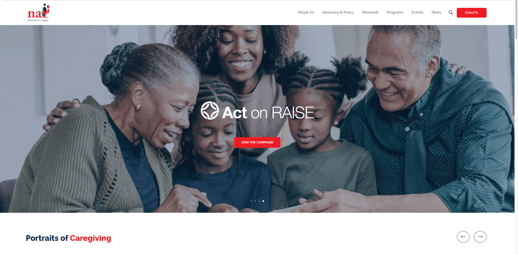
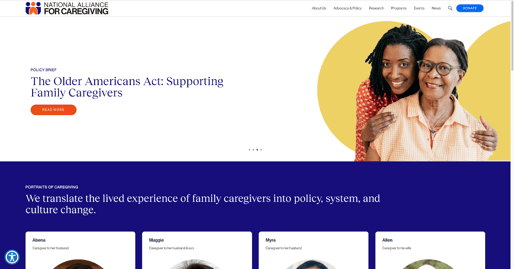
To better compare the new visual identity to the former one, view the website screenshots below.
|
Before |
|
|
After |
|
“In terms of drawing inspiration, we drew from organizations that have trust and credibility in the research and policy space. For example, we looked to the say the Commonwealth Foundation was one.”
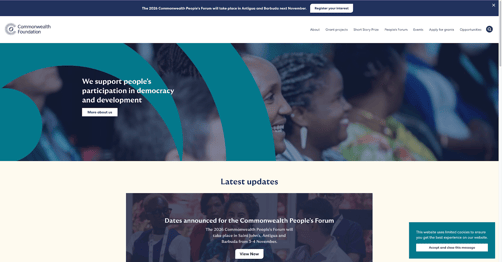
Here is a screenshot of the Commonwealth Foundation’s website.
“We approached our rebrand through the lens of, ‘how do you portray yourself in a serious, evidence-based research organization.’ On the other hand, you still want to resonate with caregivers, media, and policymakers in an emotional way as well,” Cantor added.
Scale starts at the internal level first. You have to get buy-in internally before externalizing any product updates or minor changes.
“One of the biggest challenges for us in the process was people. How do we balance what we like (internally) with what will resonate the most with our audience,” Cantor added. “Our brand name was effectively serving as the logo before, and how do we settle on a mark that adequately represents the depth of what we do in our unique space of research, policy, and advocacy?”
This process starts with buy-in, getting employees engaged and involved, and then using that input (to an extent) to drive positive change.
“In rebranding, we wanted something that reflected who we are and where we want to go. We went from five employees to 17 in three years. With this difference in size, you have to have guidelines. You need SOPs. That was a huge driver for the change. To back that up, we are spending a lot of time internally educating staff members on the new brand and ensuring consistency across departments.”
To better highlight the scale of brand consistency and governance issues, The State of Brand Consistency (2019) study (direct PDF download) from LucidPress, found that:
If you don’t have brand guidelines, this is your sign to get something put together. And if you have them—make sure that employees are given resources, and educated on usage. Lastly, and most importantly, be sure to enforce them.

“Give yourself time. I don't feel like we gave ourselves enough time and space to really think through things. Make sure you're aligned internally before you're really going all out,” Cantor added. “I would also say more time on the back end in terms of internal socializing. I wished we had had more time to spend with each of our staff members/departments and talk to them about how this was going to impact them.”
Change management and internal communications is an important part to nail in a rebrand—-and in general, with any changes or updates. Employees need to feel like they’re a part of the process, rather than bringing them in at the point of go-live. Junior and middle manager team members are client-facing, highly visible parts of the organization, and may be able to point out gaps in consideration, potential client concerns, and other important pieces of the equation.
“One great example is our policy and advocacy team. They're running a campaign with a specific newsletter heading. I wish we had had more time to create a new newsletter head for them, to talk through that with them, and just make sure that we were meeting their needs (versus doing it afterwards while we're trying to do 800 other things).”

If you’re going to do it, make sure you do it right. “From a small, nonprofit perspective, I would also urge others to recognize that you need to carve out resources to do it and do it well because you're not going to be doing this all the time. You have to be really smart and intentional about what you're going to end up with because that's what you're going to live with for a while.”
It’s also important to recognize that the process or order of operations for a rebrand might differ across organizations. “For us, we were doing the strategic plan, the messaging, the visual rebrand, and then we reflected the new brand on our website. With limited resources, you can't do everything at the same time. And that's how we prioritize.”
Feeling inspired by the rebrand? Check out their launch video and the accompanying launch blog from their CEO, Jason Resendez.
To learn more about the National Alliance for Caregiving, check out their website: https://www.caregiving.org/
Interested in seeing how a marketing partner can help you bring your healthcare company’s rebrand or brand vision to life? Get in touch with Jenn today.
Did you notice Statewise's rebrand? Learn more about where it's been and where the brand is headed, along with commentary.
Did you notice Private Home Care's rebrand? Learn more about where it's been and where the brand is headed, along with commentary.
Did you notice Caretime's brand evolution? Learn more about where it's been and where the brand is headed, along with commentary.